
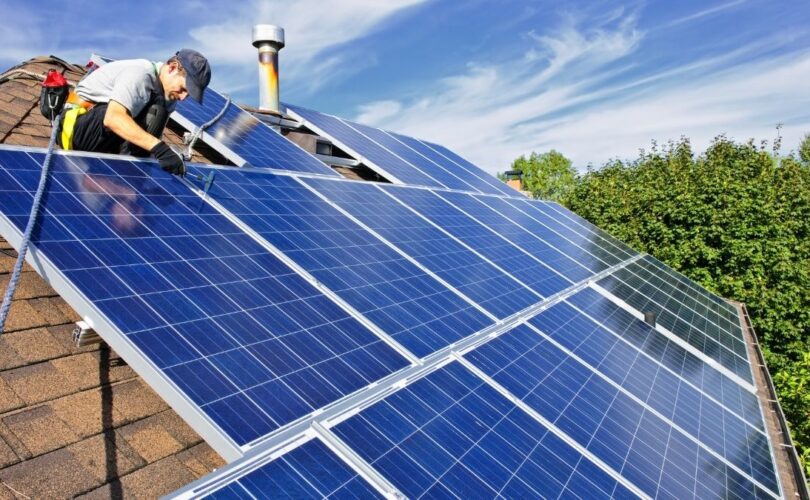
It feels like every time you open a newspaper or check the news online, there is another story about the volatile nature of energy prices. For many homeowners across the UK, the days of cheap, predictable utility bills seem to be a thing of the past. This shift has sparked a massive surge in interest regarding renewable energy, specifically when it comes to how a professional solar installation can help stabilise a household budget. It is no longer just about being environmentally conscious, although that is a fantastic bonus; it is now a calculated financial move designed to provide long-term energy security.
When you start looking into the process, it can feel a bit overwhelming. There are technical terms flying around like kilowatts, inverters, and export guarantees. However, once you strip away the jargon, the concept is quite simple. You are essentially turning your roof into a mini power station. By capturing the light from the sun—even on those typically grey and overcast British days—you can generate your own electricity and significantly reduce your reliance on the National Grid.
Evaluating if your home is ready for the change
Before you get too far down the rabbit hole of choosing specific panels, it is important to take a good look at your property. Not every roof is identical, and certain factors will influence how much energy you can actually generate. It is about more than just having a roof; it is about how that roof interacts with the environment around it.
- Roof Orientation: While south-facing roofs are the gold standard for maximum sunlight absorption, east and west-facing roofs are also highly effective, especially for capturing energy during the morning and late afternoon when household demand is often at its peak.
- Shading Issues: Even a small amount of shade from a tall tree, a chimney, or a neighbouring building can impact the efficiency of your system. Modern optimisers can help mitigate this, but a clear line of sight to the sky is always preferred.
- Structural Integrity: Solar panels and their mounting frames add weight to your roof. Most modern UK homes are built to handle this easily, but older properties might need a quick check to ensure the rafters are up to the task.
- Available Space: The more panels you can fit, the more energy you can produce. However, even a small array on a terraced house can make a noticeable dent in your monthly outgoings.
The technical bits that make it all work
When you commit to a Solar installation, you aren’t just buying glass panels. You are investing in a sophisticated system of components that work together to power your kettle, your TV, and your lights. The most visible part is the photovoltaic (PV) panels. Most installers today recommend monocrystalline panels because they are more efficient and have a sleeker, darker appearance that blends in better with traditional slate or tile roofs.
Behind the scenes, the inverter is the real workhorse. It takes the Direct Current (DC) electricity produced by the panels and converts it into Alternating Current (AC), which is what your home appliances use. You might also hear about micro-inverters or optimisers. These are clever little devices that allow each panel to work independently. This means if one panel is slightly shaded, it won’t drag down the performance of the entire system, ensuring your energy production is always optimised.
What to expect during the actual installation
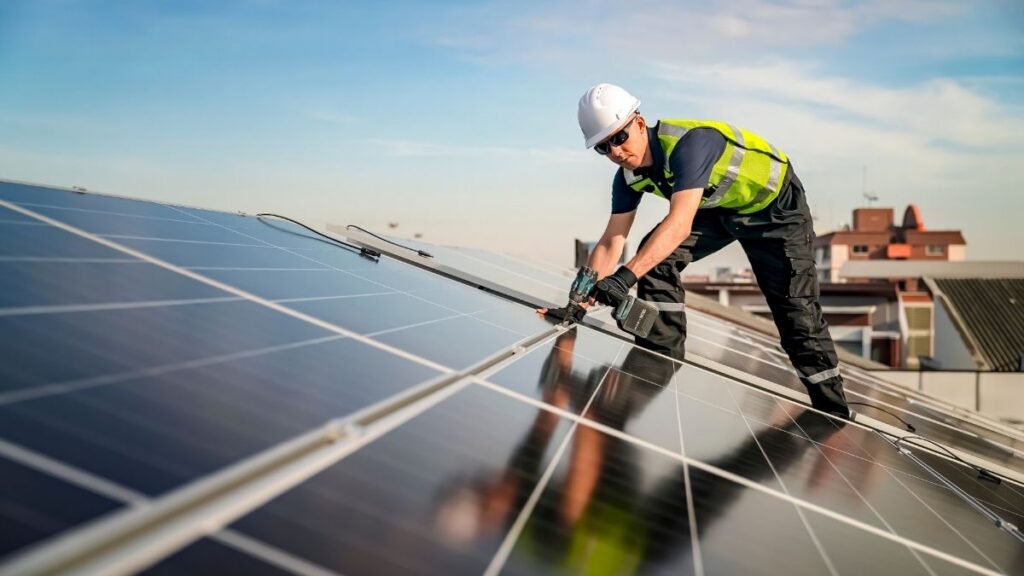
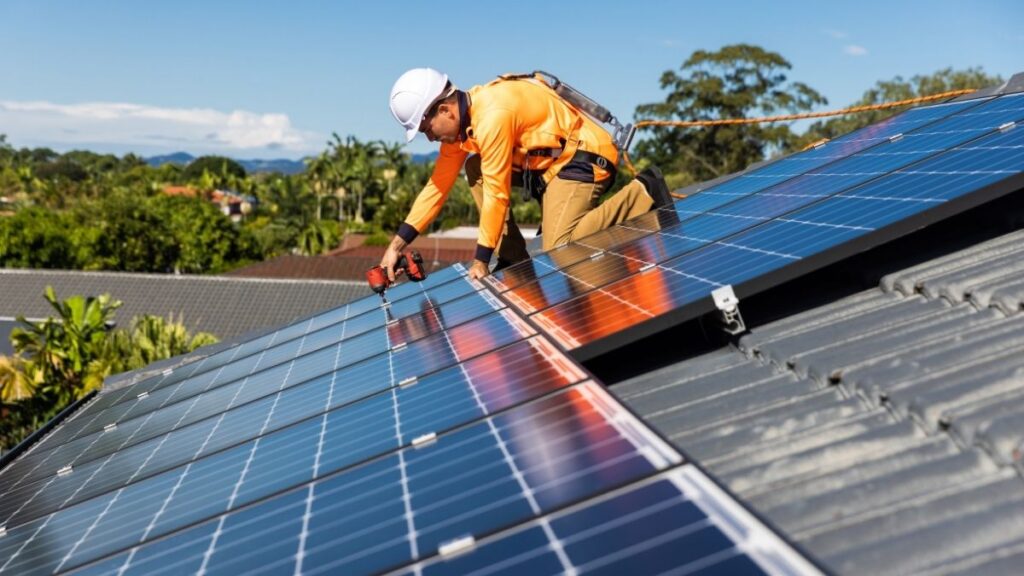
A lot of people worry that their home will become a building site for weeks, but the reality is usually much faster. Most residential projects are completed in just one or two days. The process generally follows a very specific sequence to ensure safety and quality. First, scaffolding is erected to give the team safe access to the roof. Then, the installers will fix roof anchors directly to the rafters, which provide the foundation for the aluminium mounting rails.
Once the rails are secure, the panels are lifted into place and clamped down. While the team is busy on the roof, an electrician will be working inside, usually near your fuse board or in the loft, to install the inverter and the necessary safety switches. They will also install a generation metre so you can see exactly how much green energy you are creating in real-time. Once everything is wired up and tested, the scaffolding comes down, and you are officially generating your own power.
The financial side of things and the ROI
The question everyone asks is: “When will it pay for itself?” While the upfront cost is a significant consideration, the return on investment (ROI) has improved dramatically over the last few years. There are three main ways you save money:
- Direct Savings: Every kilowatt-hour of electricity you generate and use yourself is one you don’t have to buy from your energy supplier. With prices where they are, this adds up to hundreds of pounds a year.
- The Smart Export Guarantee (SEG): If you generate more electricity than you use, you can sell the excess back to the grid. Various suppliers offer different rates, so it pays to shop around for the best export tariff.
- Property Value: Many studies suggest that homes with high energy efficiency ratings and renewable energy systems are more attractive to buyers, potentially increasing the resale value of your home.
Furthermore, the UK government currently offers a 0% VAT rate on energy-saving materials, which includes solar panels and battery storage. This incentive makes the initial solar installation much more affordable than it was just a few years ago.
Boosting your efficiency with battery storage
One of the biggest developments in recent years is the rise of home battery systems. Without a battery, any solar energy you don’t use immediately is sent back to the grid. For people who are out at work during the day, this can feel like a missed opportunity. By adding a battery to your system, you can store that daytime sunshine and use it in the evening when the sun has gone down and your energy usage typically spikes.
Batteries allow you to become much more self-sufficient. Some advanced systems even allow you to charge the battery from the grid during the night if you are on a cheap off-peak tariff, giving you a double saving. It is a way of taking full control of your energy consumption and ensuring that not a single drop of generated power goes to waste.
Paperwork and long-term maintenance
Once the physical work is done, there is a small amount of administrative work to tie up. Your installer should provide you with an MCS certificate, which proves the system was installed to high industry standards. This certificate is essential if you want to sign up for the Smart Export Guarantee. You will also need to ensure your local District Network Operator (DNO) is notified, a task that a professional installation team usually handles on your behalf.
In terms of maintenance, solar systems are remarkably low-effort. Because there are no moving parts, there is very little that can go wrong. Most panels are self-cleaning to an extent, as the rain will wash away most dust and debris. However, giving them a professional clean every few years and keeping an eye on your monitoring app to ensure everything is performing as expected is generally all that is required to keep the system running for 25 years or more. Most modern monitoring apps are incredibly user-friendly, showing you daily, monthly, and yearly production stats right on your smartphone, which makes it quite addictive to track how much you are saving.

Thinket is a gaming journalist and critic specializing in RPGs and open-world adventures. He explores gameplay mechanics, storytelling depth, and player immersion across both indie and AAA titles.